



If you’ve ever wondered why red light looks the way it does, or why red light therapy (RLT) has become so popular, everything comes back to one core concept: red light wavelength.
In this blog, we’ll break down what red light wavelength is, the red light therapy wavelength for skin, for sleep, etc., and how often to use it.
What Is Red Light Wavelength
In the electromagnetic spectrum, each color corresponds to a different wavelength, measured in nanometers (nm). Red light has one of the longest wavelengths in the visible spectrum. While exact ranges can vary slightly between sources, red light is generally defined as the wavelength in the range of about 620–750 nm.
Below that, you are moving into the orange light. Above that? You’re entering the near-infrared (NIR) region, which is invisible to the human eye.
What Wavelength Is Best for Red Light Therapy
Not all red light behaves the same way. Some wavelengths are absorbed more efficiently by the mitochondria in our cells, while others barely trigger a biological response. Research over the last decade has identified a therapeutic window where red and near-infrared wavelengths are most likely to support cell energy, circulation, and recovery[1]. This is exactly where red light therapy kicks in.
How do they work? Visible red light in the 630–670 nm range tends to interact mainly with the upper layers of the skin, while longer, near-infrared wavelengths around 800–850 nm can travel deeper into muscle, joints, and connective tissue.
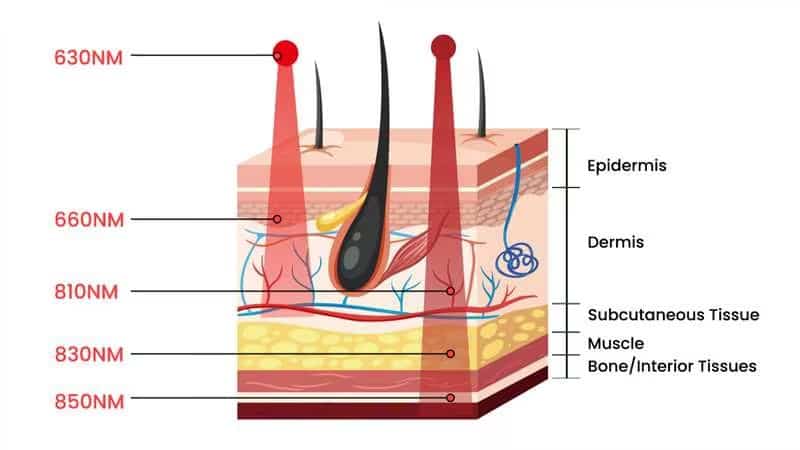
During these spectrum ranges, there’s no so-called best wavelength for red light therapy, but two wavelengths do capture our attention:
Visible red light around 660 nm
Near-infrared light around 850 nm
Why 660 nm Red Light Wavelength Matters
A wavelength of 660 nm red light sits in the heart of the therapeutic red range. It is readily absorbed by skin cells and the mitochondria near the surface, making it especially well-suited for targeting the epidermis and upper dermis, where collagen, elastin, and dense networks of tiny blood vessels are found.
Because of this strong interaction with superficial tissues, 660 nm is one of the most commonly used wavelengths in studies focusing on skin appearance, texture, and overall complexion support.
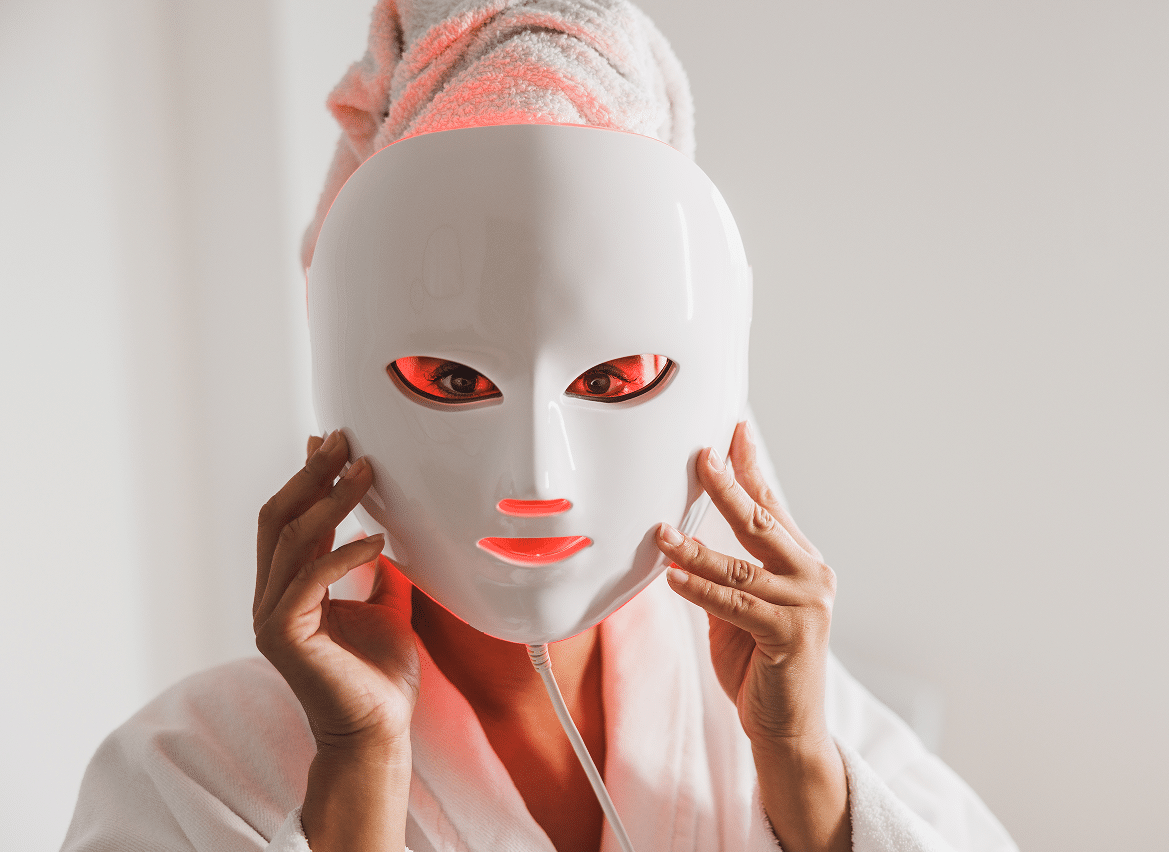
It does not need to travel very deep to be effective, which is why 660 nm is the ideal red light for sleep, face, neck, and other areas.
Why 850 nm Red Light Matters
By contrast, 850 nm is a near-infrared wavelength, still within the same therapeutic window, but invisible to the eye and capable of reaching deeper tissue layers than visible red light.
This longer wavelength can penetrate beyond the surface and interact with muscles, joints, and connective tissue, making 850 nm particularly relevant for people who want to support post-workout recovery, ease discomfort in heavily used areas, and encourage healthy local circulation in thicker regions of the body.
You may not see 850 nm with your eyes, but your body can still absorb and respond to it at a deeper level, which is why it is often chosen for wellness applications that go beyond purely cosmetic goals.
The Power of Combining 660 nm and 850 nm
Instead of forcing you to choose between surface and depth, EmberTouch red light therapy uses dual-chip LEDs that emit both 660 nm and 850 nm. The 660 nm red light focuses on skin-level benefits, concentrating its effects on cells closer to the surface, while the 850 nm near-infrared light complements it by reaching further into underlying tissues within the same session.
Backed by registration with the U.S. FDA as a Class II infrared therapeutic light, EmberTouch pairs these two scientifically favored wavelengths in one compact device, giving you a solution designed to cover a wide range of red light therapy needs, from everyday skin-care rituals to whole-body recovery routines, while staying within the most researched and trusted parts of the red and near-infrared spectrum.
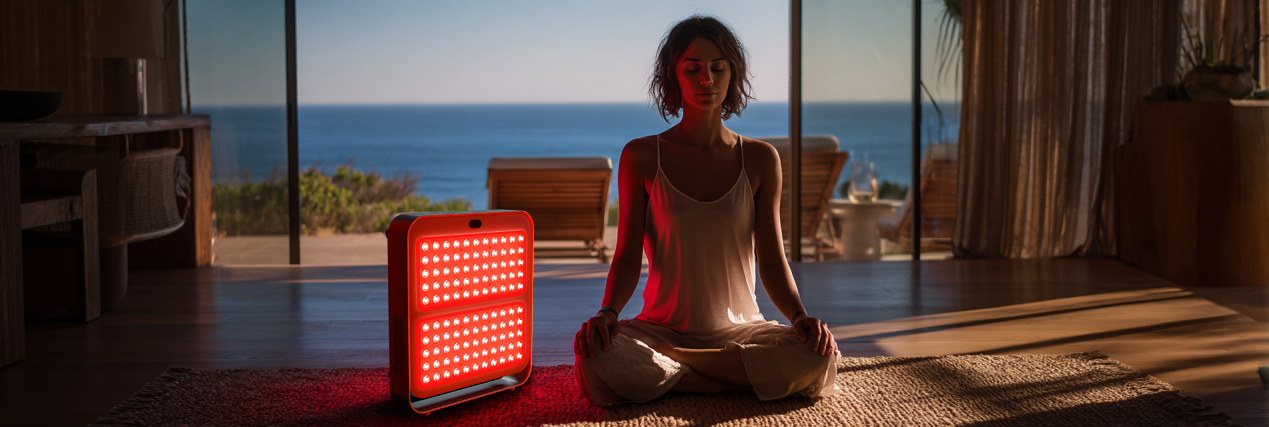
Bonus: Red Light Therapy and Frequency
How often should you do red light therapy? In general, most people do well starting with short, consistent sessions about 3-5 times per week and then adjusting based on comfort and goals (skin, pain relief, or better sleep).
Because your ideal routine can vary depending on your skin type, lifestyle, and sensitivity, we’ve put together a separate, step-by-step guide that walks through recommended session length and weekly frequency for different use cases.
For a detailed breakdown, check out our full article on how often to use red light therapy.
Reference
[1] de Freitas LF, Hamblin MR. Proposed mechanisms of photobiomodulation or low-level light therapy. IEEE Journal of Selected Topics in Quantum Electronics. 2016;22(3):7000417. doi:10.1109/JSTQE.2016.2561201.