


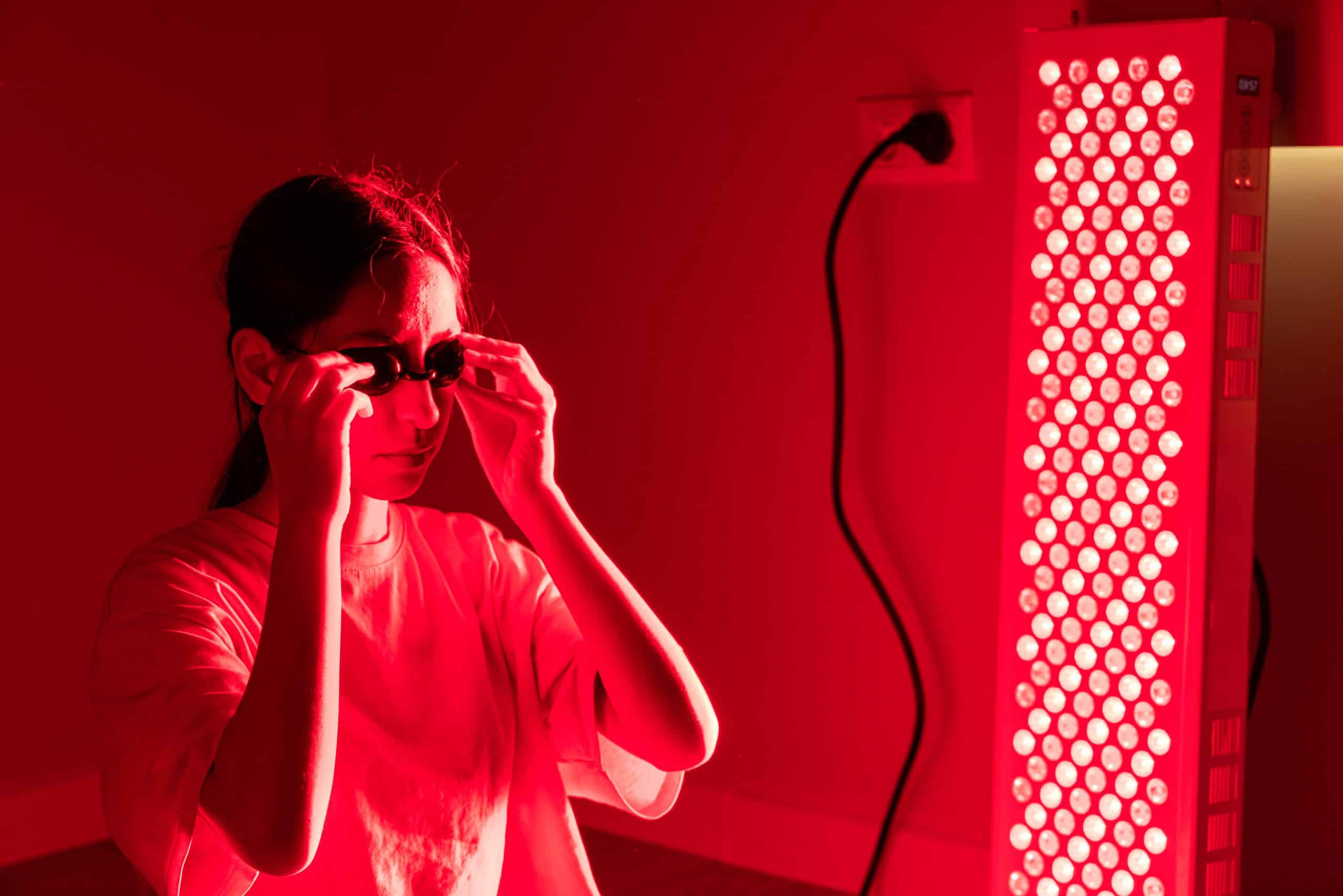

As more people try red light therapy (RLT) at spas, gyms, and dermatology clinics, a common question arises: Does red light therapy tan you? Whether you prefer to tan your skin while receiving red light treatment, or you’d rather keep your skin untouched, the short answer is no. Red light therapy does not tan your skin.
There’s more to talk about, though. For example, why red light therapy doesn’t cause tanning, how it affects your skin, what makes it different from UV tanning devices, and whether it can boost your natural glow in other ways. Let’s keep digging!
How Does Red Light Therapy Work
Red light therapy works by delivering low-level wavelengths of red light (630–660 nm) and near-infrared (800–850 nm) light deep into your skin and cells.
On one hand, red light targets the surface layers of the skin, supporting collagen production and enhancing circulation. On the other hand, near-infrared light penetrates even deeper, reaching muscles, joints, and tissues for cellular repair and reduced inflammation. But neither of them has anything to do with tanning.
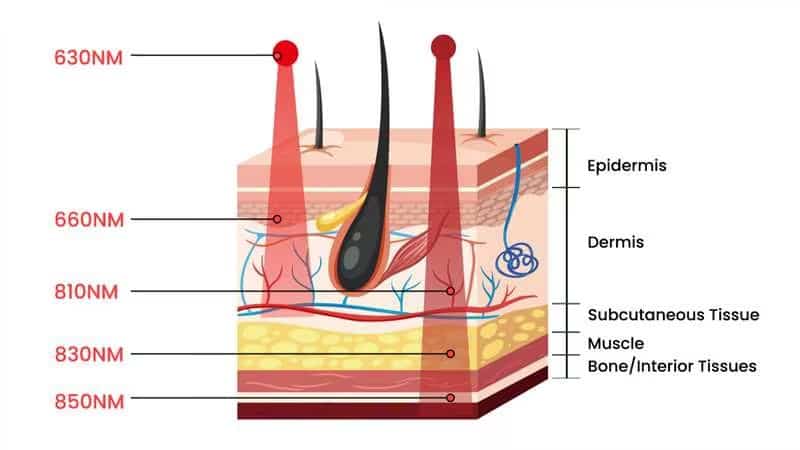
For your skin to tan, UV light must be present. Only UV radiation has enough energy to stimulate melanocytes, the pigment-producing cells that release melanin as a defense mechanism. Without UV exposure, melanocytes remain inactive, meaning:
- No melanin surge
- No pigment darkening
- No tanning response
In other words, although red and near-infrared light can penetrate the skin and influence cellular activity, they do not trigger the biological pathway that leads to tanning, since that pathway depends entirely on UV-induced melanin production. That’s the core reason why red light therapy doesn’t tan you.
What Does Red Light Therapy Do to Your Skin
If red light therapy doesn’t tan your skin, then what does it actually do? The answer: quite a lot.
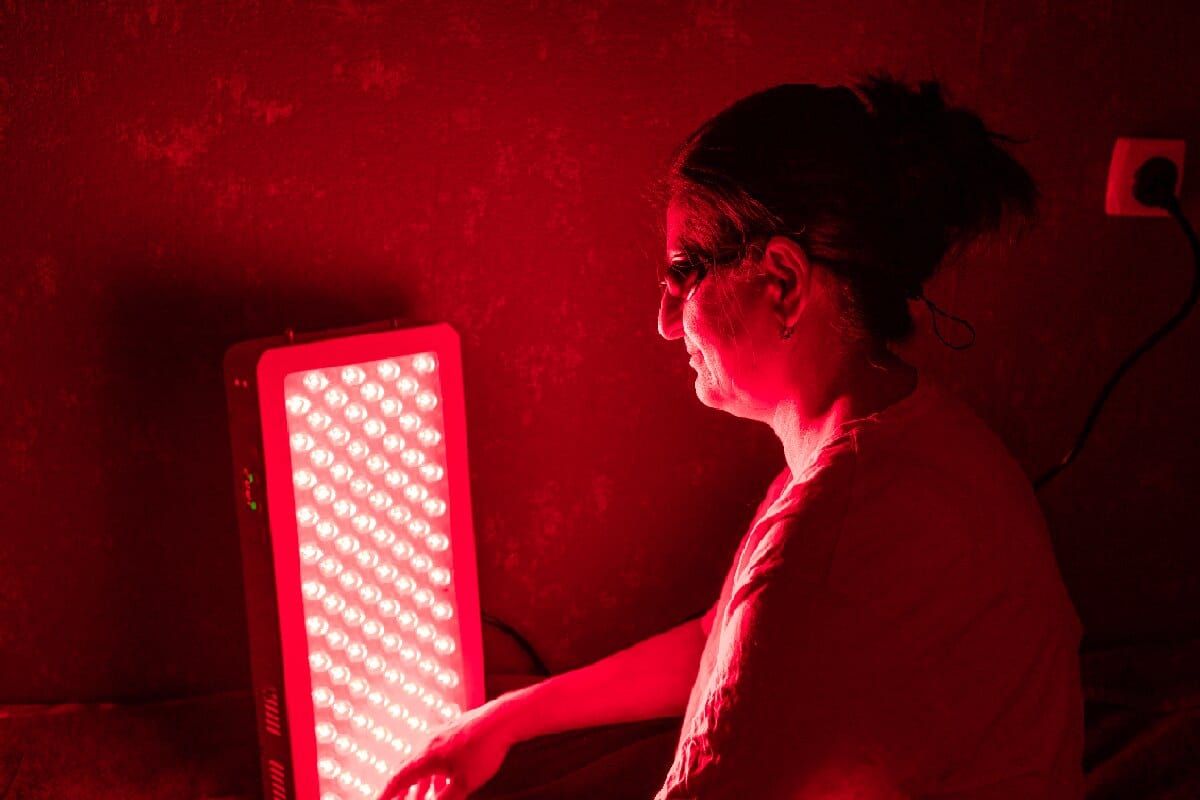
Unlike UV light, which stresses your skin and forces it to produce melanin, red and near-infrared wavelengths work through cellular photobiomodulation, a mechanism well-documented in dermatology and regenerative medicine. Instead of triggering a tanning response, RLT improves skin health from deep within.
Boosts Collagen and Firms the Skin
Red light stimulates fibroblasts, the cells responsible for collagen production, helping reduce fine lines and improve overall elasticity. Clinical research has shown that low-level red and near-infrared wavelengths can increase collagen density and improve signs of photoaging[1].
Enhances Circulation for a Natural Glow
RLT promotes microcirculation and increases oxygen delivery, which can give the complexion a naturally brighter, healthier appearance. Dermatology reports also highlight red light’s ability to enhance ATP production, supporting a visible improvement in radiance[2]. If you are wondering: Why do I look more tan after red light therapy? The glow you see is actually a benefit of the RLT.
Reduces Redness and Calms Inflammation
Unlike UV exposure, which can irritate and inflame the skin, red wavelengths modulate inflammatory pathways. Studies using 630 nm red light device found significant reductions in inflammatory markers such as IL-1β, alongside improved tissue recovery[3].
Supports Skin Repair and Accelerates Healing
Because RLT boosts cellular energy production, the skin becomes more efficient at repairing environmental damage, post-acne marks, and uneven texture. Reviews of photobiomodulation confirm that red/NIR light enhances wound healing, collagen remodeling, and tissue regeneration[4].
Strengthens the Skin Barrier and Improves Hydration
By improving cellular performance and circulation, red light therapy contributes to a stronger, more hydrated skin barrier. Thus, many users notice smoother texture and reduced dryness after consistent sessions.
Red Light Therapy vs. Tanning Beds: Key Differences
To help you better understand the difference between red light therapy and tanning devices such as tanning beds, the comparison below highlights how the two systems differ in light type, skin effects, risks, and intended benefits, making it clear why RLT cannot produce a tan.
That’s spot on!