




Red light therapy (RLT) is found to be useful in treating a range of conditions, from skin rejuvenation to pain relief. However, its usage during pregnancy remains a doubt. Is red light therapy safe for pregnancy? Here are our key takeaways:
- Red light therapy (RLT) uses non-ionizing light. So, it doesn’t involve the type of ionizing radiation that’s linked with DNA damage risk in pregnancy.
- There aren’t enough high-quality studies on pregnant people to say red light therapy is definitely safe (or unsafe) during pregnancy.
- Potential risks are still worth considering. Pregnancy can make skin more sensitive and increase heat/tissue stress.
How Does Red Light Therapy Work
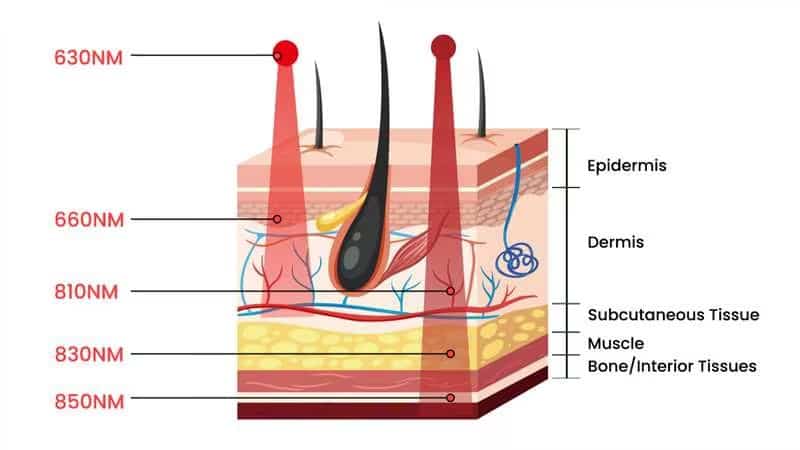
Red light therapy (RLT) works through a process called photobiomodulation. In simple terms, specific wavelengths of red (about 630–660 nm) and near-infrared light (about 800–850 nm) deliver light energy to your tissues.
When this light reaches the cells, it is absorbed by light-sensitive components inside the mitochondria, especially an enzyme called cytochrome c oxidase. This can help cells produce more ATP (cellular energy) and may trigger helpful signaling changes, such as:
- Reduced inflammation signaling
- Improved microcirculation (better blood flow in small vessels)
- Faster tissue repair and wound-healing support
- Collagen and skin-repair pathways activation
- Temporary nitric oxide release, which may support circulation and recovery
Is Red Light Therapy Safe During Pregnancy
Digging through the science of how red light therapy works, it does not use ionizing radiation (the type associated with DNA damage risk), such as X-rays or gamma rays, and it is not a radioactive source. In other words, red light therapy is non-ionizing light. That’s why, theoretically, it doesn’t carry the same radiation risks that people worry about during pregnancy (like exposure to X-rays).
That said, pregnancy is a special situation, so the safest approach is still to be conservative. Right now, there simply isn’t a large body of well-controlled research specifically evaluating red light therapy use during pregnancy, so we can’t jump to the conclusion that red light therapy is or isn’t safe during pregnancy.
Based on what we know, there are potential risks as well as benefits of using red light therapy devices during pregnancy.
Potential Risks of Red Light Therapy During Pregnancy
The biggest issue is uncertainty: there isn’t enough pregnancy-specific research to clearly define what’s definitely safe across different devices, intensities, treatment areas, and trimester stages. If you are skeptical about using RLT during pregnancy, here are the main potential downsides to keep in mind:
Skin Sensitivity and Inflammation
Pregnancy is associated with hormonal, metabolic, and immunologic shifts that can noticeably change how the skin looks and behaves, affecting pigmentation, blood vessels, and overall skin reactivity[1]. And when skin is already more sensitive during pregnancy, RLT could make redness, irritation, or inflammation more noticeable for some people, especially on areas prone to hormonal changes like the face.
Increased Heat and Tissue Stress
While typical red light devices are designed to be gentle, higher-intensity devices or long sessions could increase heat and tissue stress. As a conservative safety approach, many clinicians recommend not aiming the red light directly at the belly or pelvic area during pregnancy unless your healthcare provider specifically says it’s appropriate.
Eye Safety
Bright red/near-infrared light can be uncomfortable and may pose a risk to the eyes with direct exposure. Eye protection is recommended, especially with higher-powered panels or devices used near the face.
Read more: Can red light therapy hurt your eyes?
Potential Benefits of Red Light Therapy During Pregnancy
Besides the risks, research in non-pregnant populations (and a small amount of research in reproductive medicine contexts) suggests a few theoretical or possible RLT benefits for pregnancy.
For example, photobiomodulation has been studied for different kinds of pain and inflammation-related conditions in broader clinical research[2], including musculoskeletal pain, so it’s sometimes discussed as an option to help with soreness, stiffness, or discomfort.

Moreover, PBM has been explored for tissue recovery and wound-healing support in various clinical contexts, and this broader literature is part of the reason some people ask about postpartum use (for example, supporting recovery after skin procedures or minor wounds).
How to Use Red Light Therapy Properly During Pregnancy
If you’re considering red light therapy while pregnant, treat it as a ‘talk to your provider first’ decision, especially if you have a high-risk pregnancy or any medical conditions. A cautious, practical approach often includes:
- Check with your OB-GYN or midwife first, particularly before starting a new device or routine.
- Avoid direct exposure over the abdomen/pelvic area unless your clinician explicitly advises otherwise.
- Keep sessions short and infrequent, following manufacturer guidance rather than more is better.
- Use a reputable device, preferably an FDA-approved red light device with clearly stated wavelengths and output, and avoid unknown or low-quality products.
- Stop if anything feels off (unusual warmth, discomfort, skin irritation) and reassess with your provider.
Reference
[1] Bechtel, M.A. (2020). Physiologic Skin Changes in Pregnancy. In: Tyler, K. (eds) Cutaneous Disorders of Pregnancy. Springer, Cham. https://doi.org/10.1007/978-3-030-49285-4_1
[2] Son, Y., Lee, H., Yu, S. et al. Effects of photobiomodulation on multiple health outcomes: an umbrella review of randomized clinical trials. Syst Rev 14, 160 (2025). https://doi.org/10.1186/s13643-025-02902-3
11