


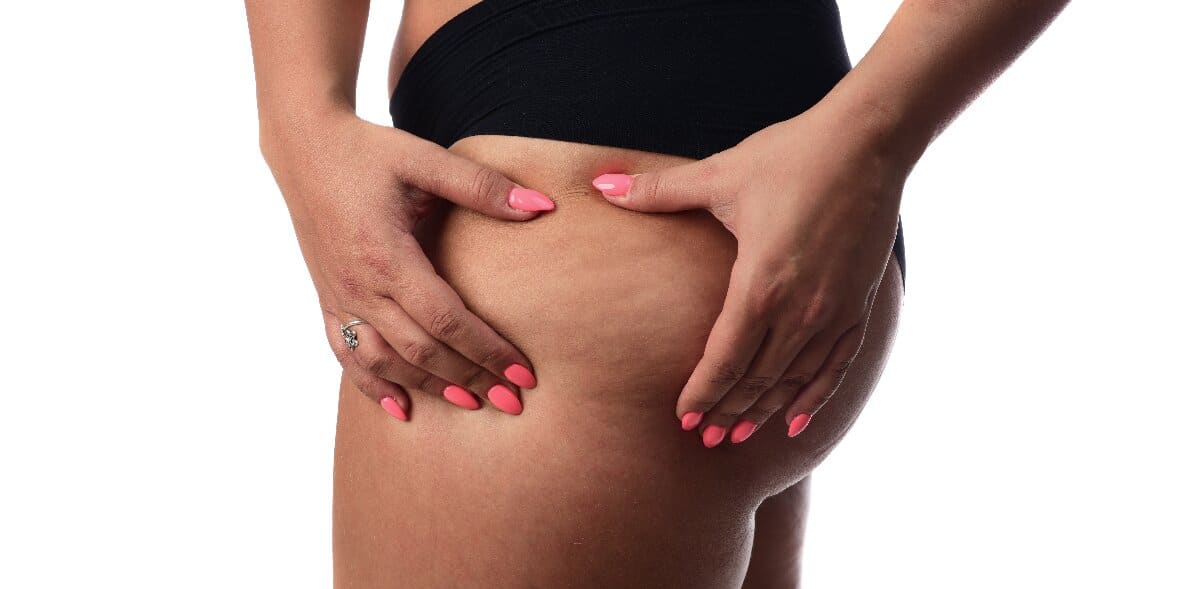

How Can Red Light Therapy Help With Cellulite
Red light therapy (and near-infrared, NIR) may support smoother-looking skin by improving skin quality, like firmness, elasticity, and texture, but as a standalone approach, the evidence for meaningful cellulite reduction is limited, and results can be modest.[1,2,3] It’s best understood not as a ‘fat-melting’ solution, but as a supportive add-on that may help optimize a broader cellulite strategy over time.[1,2]
Here’s how red light (and especially near-infrared) may fit into a cellulite routine:
Supports Collagen and Skin Elasticity
Red/NIR light is widely discussed in the photobiomodulation literature for its role in cellular energy and signaling (often described via mitochondrial pathways), which may support recovery responses in tissue.[1] In skin models, LED light has also been associated with reduced expression of certain inflammatory mediators and increased procollagen synthesis—mechanisms that align with “healthier-looking” skin over time.[4]
Supports Circulation and Tissue Recovery
Cellulite often looks worse when tissue appears swollen or sluggish. Red light therapy is commonly used to support microcirculation and recovery, which may help the area look more even, especially when combined with movement and good overall habits.
Works Best as a Booster With Energy-Based Treatments (RF / Ultrasound Cavitation)
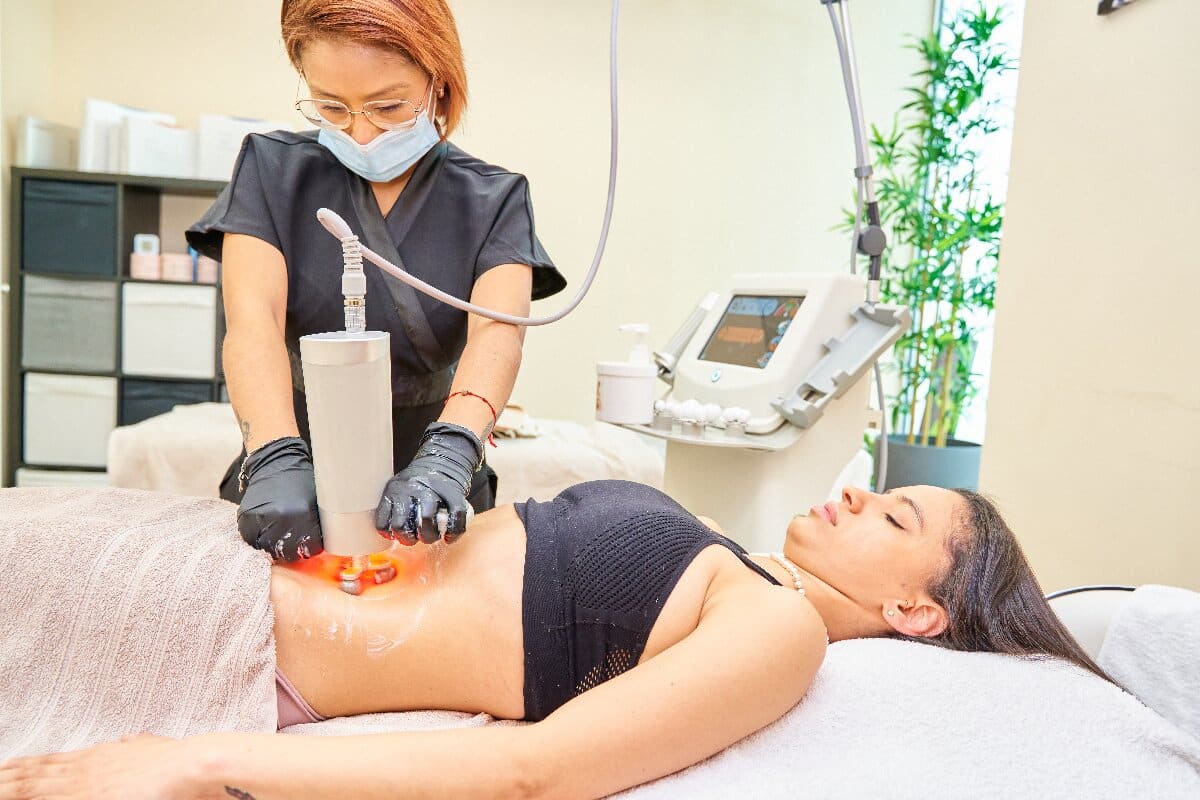
In clinical settings, red/near-infrared light is often positioned as a performance enhancer, used alongside deeper, energy-based approaches like radiofrequency (RF) and ultrasound cavitation, which target the underlying structures linked to cellulite. In other words, light therapy may help amplify results when paired with stronger core treatments, rather than replace them.
Red Light Therapy for Cellulite: How Long Does It Take to See Results
For most people who notice changes, improvements tend to be gradual rather than immediate. Based on published studies and real-world user experiences, early changes are often reported within 4–12 weeks, with more noticeable improvements taking longer and requiring consistency.[5]
In clinical research, protocols combining infrared LED with exercise observed measurable body and appearance-related changes over a 3-month period, suggesting that light therapy works best as part of a sustained routine rather than a short-term intervention.[1] Similarly, controlled trials using low-level laser/light therapies typically evaluated outcomes after 8–12 weeks of consistent treatment.
How Often to Use Red Light Therapy for Cellulite
There’s no single universal schedule that works for everyone, but research and real-world use patterns point to one clear theme: consistency matters more than intensity. Plus, remember to combine other treatments as we mentioned above.
At-home red and near-infrared devices generally operate at lower output levels than in-clinic systems, which is why more frequent use is commonly recommended. Many users and manufacturers, such as EmberTouch, aim for 3–5 sessions per week, or short daily sessions on a near-daily basis. Session length typically ranges from 10 to 20 minutes per treatment area, depending on device output, distance, and comfort.
Bottom Line
Red light therapy can be useful for skin support and maintenance, but for visible cellulite reduction, it’s typically most effective as a complementary step, especially when combined with treatments like RF or ultrasound cavitation, plus healthy nutrition and exercise.
References
[1]Glass GE. Photobiomodulation: The Clinical Applications of Low-Level Light Therapy. Aesthet Surg J. 2021 May 18;41(6):723-738. doi: 10.1093/asj/sjab025. Erratum in: Aesthet Surg J. 2022 Apr 12;42(5):566. doi: 10.1093/asj/sjab396. PMID: 33471046.
[2]Avram MM. Cellulite: a review of its physiology and treatment. J Cosmet Laser Ther. 2004 Dec;6(4):181-5. doi: 10.1080/14764170410003057. PMID: 16020201.
[3]Emanuele E. Cellulite: advances in treatment: facts and controversies. Clin Dermatol. 2013 Nov-Dec;31(6):725-30. doi: 10.1016/j.clindermatol.2013.05.009. PMID: 24160277.
[4]Kim WS, Calderhead RG. Is light-emitting diode phototherapy (LED-LLLT) really effective? Laser Ther. 2011;20(3):205-15. doi: 10.5978/islsm.20.205. PMID: 24155530; PMCID: PMC3799034.
[5]Paolillo FR, Borghi-Silva A, Parizotto NA, Kurachi C, Bagnato VS. New treatment of cellulite with infrared-LED illumination applied during high-intensity treadmill training. J Cosmet Laser Ther. 2011 Aug;13(4):166-71. doi: 10.3109/14764172.2011.594065. PMID: 21740089.