



How Long Should You Use Red Light Therapy on Your Face
Whether you are having aging skin, acne, psoriasis & eczema, or other types of skin issues, you can find suggested red light frequency and duration in the following chart.
Skin Issue | Treatment Time | Frequency | Time to See Results |
Aging Skin (Fine Lines & Wrinkles) | 12 minutes | 3 to 5 times per week | 1 to 3 months |
Acne | 20 minutes | 2 to 3 times per week | 2 to 12 weeks |
Dark Spots & Hyperpigmentation | 10 to 15 minutes | 2 to 3 times per week | About 3 months |
Reducing Scars | 10 to 15 minutes | 3 times per week | From 3 weeks |
Psoriasis & Eczema | 20 minutes | 2 to 3 times per week or 48 hours between sessions | 4 to 5 weeks |
Rosacea | 10 to 15 minutes | 2 to 3 times per week | 2 to 4 weeks |
Red Light Therapy for Aging Skin
A 2023 study investigated the effects of a red LED mask (≈630 ± 10 nm) used twice a week for 12 minutes per session over 3 months on facial aging markers in healthy adult women. Participants showed progressive improvements in multiple skin attributes, including:
- Wrinkle depth reduction (especially around crow’s feet)
- Improved firmness and elasticity
- Increased dermal density
- Smoother skin texture
- More even skin tone and reduced pore size
Red Light Therapy for Acne
Red light works by reducing oil production in sebaceous glands, lowering inflammation, and regulating the accumulation of dead skin cells in follicles, which helps prevent new breakouts. Meanwhile, blue light complements red light by targeting acne-causing bacteria. For optimal results, alternating between red and blue light can lead to clearer skin and a reduction in acne severity over time [1].
Dark Spots and Hyperpigmentation
Research has demonstrated that red light therapy can help reduce the appearance of dark spots and hyperpigmentation, particularly in patients with melasma. Red light therapy targets melanocytes, the cells responsible for producing melanin, and inhibits the enzyme tyrosinase, which is crucial for melanin production.
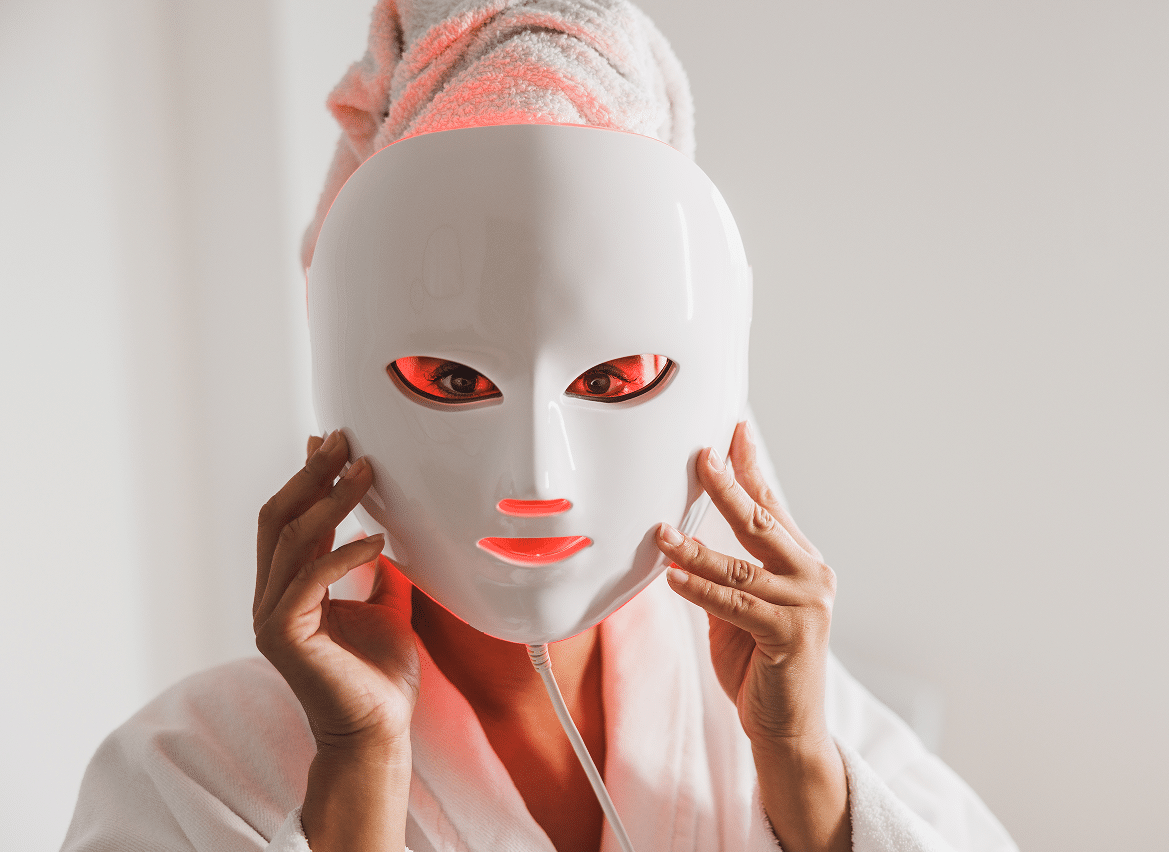
By reducing excess melanin, red light helps diminish dark spots and even out skin tone. At-home treatment protocols recommend 10 to 15-minute sessions, two to three times a week, to achieve similar results [2].
Red Light Therapy for Scars
Red light therapy works by stimulating collagen production and promoting tissue regeneration, which is vital for healing scars. The increased blood circulation facilitated by red light also contributes to better oxygenation and nutrient supply to the affected area.
Regular sessions of 10 to 15 minutes, two to three times a week, can significantly improve scar tissue, particularly when treatments are started early.
Psoriasis and Eczema
In one study, patients with psoriasis experienced improvement of up to 100% after receiving combined red and infrared light treatments twice a week for 20 minutes, with results evaluated over a 4 to 5-week period.
Red light therapy helps soothe the redness and irritation caused by these inflammatory skin conditions. It works by calming the immune response in the skin, which is typically overactive in conditions like psoriasis and eczema. Though results can take over a month of consistent treatment, significant improvements are often achieved after several weeks [3].
Tips for Effective Red Light Therapy Use on Your Face
1. Always cleanse your face before using red light therapy. Removing makeup, dirt, and oil allows the light to penetrate your skin more effectively. Then, for the best results, aim to use red light therapy consistently. Skipping sessions can delay your progress.
2. While it may be tempting to use the therapy for extended periods, overuse can lead to skin irritation or other adverse effects. If you are not sure of the frequency, check our article about How Often Should You Do Red Light Therapy.
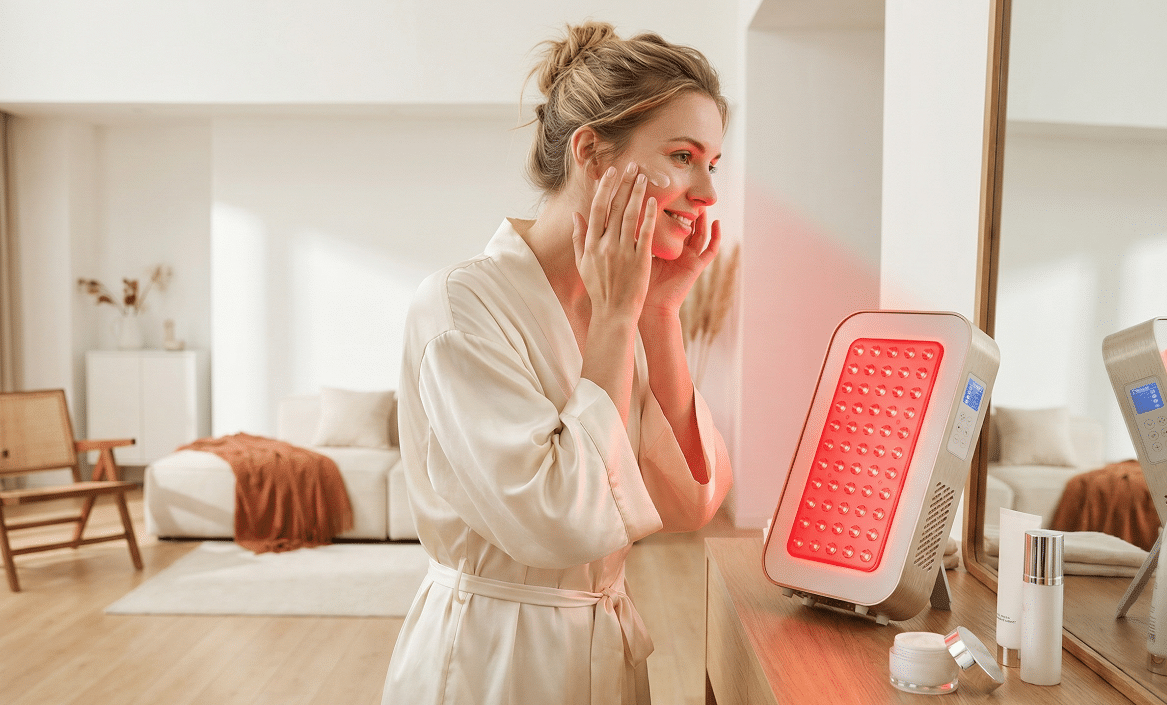
3. Red light therapy, eyes open or closed? While most red light devices are safe to human eyes, it’s best to keep your eyes shut during the session. Some devices, such as EmberTouch red light therapy panels, all come with protective goggles to avoid eye strain.
4. Not all red light therapy devices are created equal. Ensure you choose a high-quality, FDA-approved device that provides the appropriate wavelengths for facial treatments.
How Long Until You See Red Light Therapy Results
The time it takes to see visible results can vary based on your skin type and the specific condition you’re treating. In general, you may begin to notice subtle improvements in your skin after 2 weeks, with more significant changes appearing at around 4 to 6 weeks. Full results often take around 8 to 12 weeks of consistent therapy.
References
[1] Glass GE. Photobiomodulation: The Clinical Applications of Low-Level Light Therapy. Aesthet Surg J. 2021 May 18;41(6):723-738. doi: 10.1093/asj/sjab025. Erratum in: Aesthet Surg J. 2022 Apr 12;42(5):566. doi: 10.1093/asj/sjab396. PMID: 33471046.
[2] Avram MM. Cellulite: a review of its physiology and treatment. J Cosmet Laser Ther. 2004 Dec;6(4):181-5. doi: 10.1080/14764170410003057. PMID: 16020201.
[3] Zhang P, Wu MX. A clinical review of phototherapy for psoriasis. Lasers Med Sci. 2018 Jan;33(1):173-180. doi: 10.1007/s10103-017-2360-1. Epub 2017 Oct 24. PMID: 29067616; PMCID: PMC5756569.