



If you’ve searched “can red light therapy regrow gums”, you’ve probably seen some bold promises such as red light therapy can regenerate your gumline, reverse recession, and grow new gums fast. Is it true? Here’s what we know:
Red light therapy may support gum healing, reduce inflammation, and improve comfort as an adjunct to professional dental care, but it does not reliably regrow lost gum tissue or rebuild a receded gumline the way grafting procedures can.
Let’s break it down in the following article.
What Regrow Gums Really Means
Most people searching for gum regrowth are usually dealing with one of three situations:
- Gingivitis/inflamed gums (puffy, red, tender, bleeding)
- Periodontitis (a deeper infection that creates pockets and can involve bone loss)
- Gum recession (the gumline has migrated downward, exposing the root surface)
With gingivitis (and sometimes mild periodontal inflammation), gums can look fuller again after the cause is treated, because swelling, redness, and bleeding calm down, and the tissue becomes healthier. This ‘bounce back’ is mostly a recovery of tissue health, not the creation of brand-new gum where it was lost.
True gum recession is different, though. Once the gum margin has moved and the root surface is exposed, that’s typically a structural change. In many cases, restoring coverage in a predictable way involves periodontal interventions such as gum grafting (root coverage), as periodontology organizations commonly explain.
We have to be clear that red light therapy is not capable of fixing gum recession, but it does a good job at reducing inflammation and supporting a better healing environment.
Where Does Red Light Therapy Fit in Dentistry
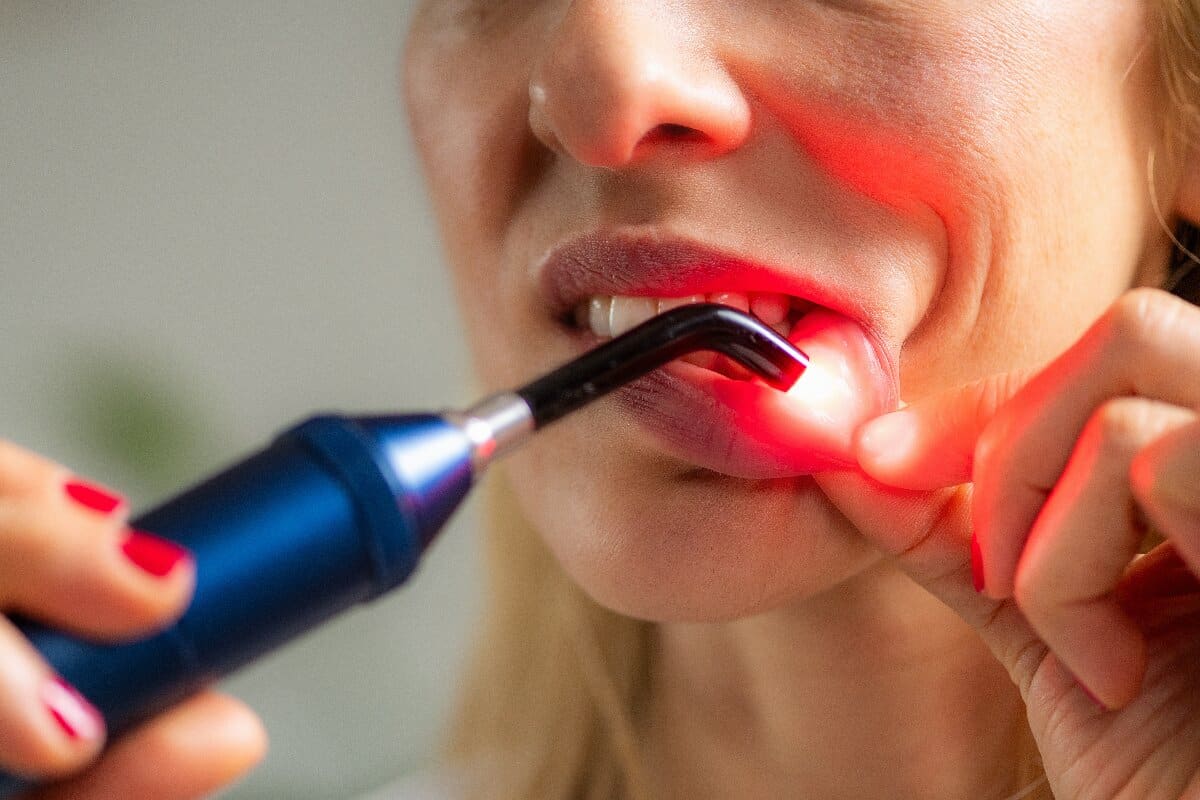
Now that we’ve clarified what gum regrowth really means, it’s easier to place red light therapy in the right category. Red light therapy isn’t a stand-alone cure for gum recession, but it can still be relevant in dentistry because its main strength is supporting healing and managing inflammation, two things that directly influence gum comfort and recovery.
Red light therapy in dentistry is usually used as an adjunct[1]. In dental settings, the red light wavelength isn’t burning tissue or killing bacteria the way some surgical lasers do. Instead, the light energy is absorbed by gum cells and helps trigger biological processes linked to repair.
This fits perfectly with what we said earlier: PBM helps the environment, but it doesn’t magically rebuild a gumline that has already receded.
Why Does Red Light Therapy Help Inflamed or Healing Gums
One of the most commonly cited mechanisms is that red and near-infrared light can interact with mitochondria, the power stations inside your cells. When mitochondria function more efficiently, cells may produce more ATP, the energy that tissues need to carry out repair[2].
At the same time, PBM is often described as nudging cells to release small signaling molecules that guide healing pathways. In practical terms, this is why red light therapy is frequently associated with:
- Reduced inflammation and less tissue irritation
- Faster recovery after gum treatments
- Support for cellular repair activity, including processes related to collagen and connective tissue maintenance
- Lower oxidative stress, which can otherwise slow recovery
Because of those effects, PBM is most commonly positioned as supportive care in situations like:
- After professional cleanings or periodontal treatment, when tissues are tender and healing[3]
- For gum inflammation management, alongside plaque control and professional guidance
- General soft-tissue recovery, where the goal is comfort and healing, not structural repositioning of the gumline
Tips on Using Red Light Therapy for Gums
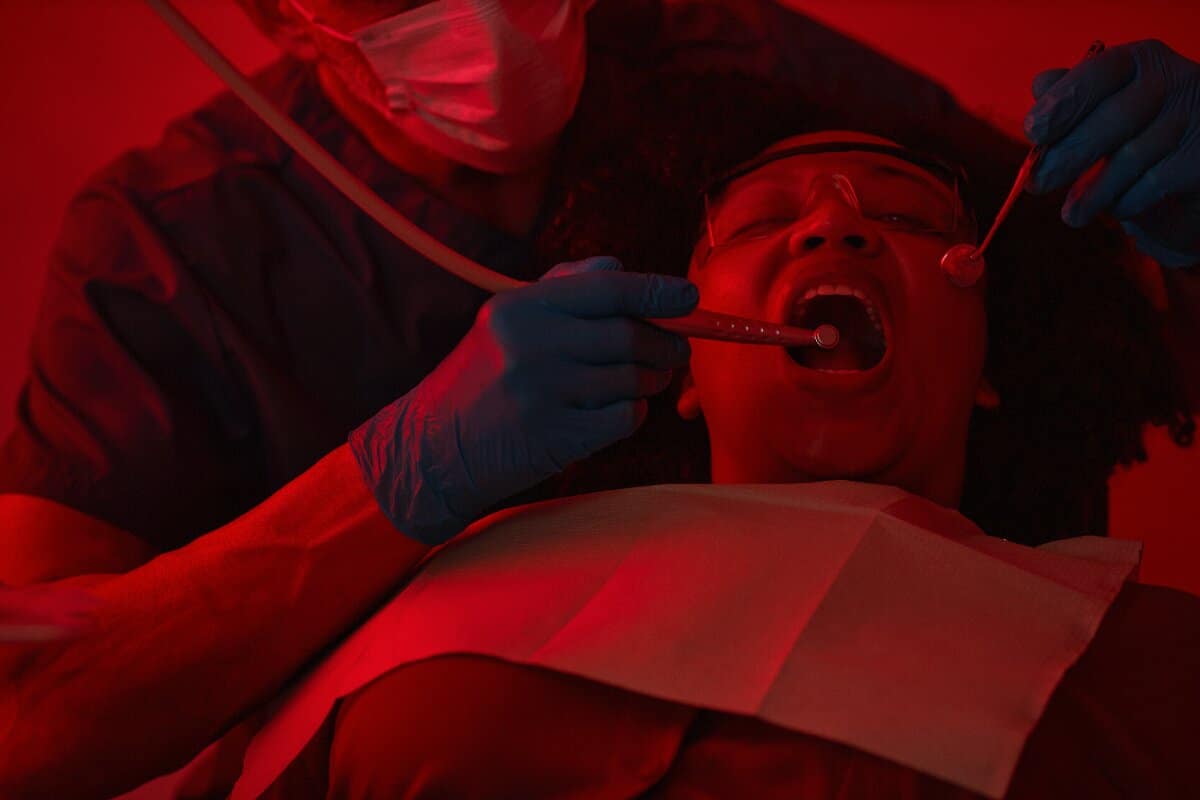
Thanks to the benefits of red light therapy in improving gum comfort and supporting healing, you can use it as an effective add-on to enhance your oral condition. Here are some practical, realistic tips to get the most out of it.
1) Choose a device made for oral use (or safe near-mouth use)
For at-home gum support, use a red light therapy device that includes near-infrared light, which can reach the deeper gum tissue. The EmberTouch Red Light Therapy Panel combines both red and near-infrared wavelengths in one device and is FDA-cleared, making it a higher-confidence option for people who want a well-built, regulated device for consistent gum improvement.
2) Keep distance and placement consistent
PBM is very sensitive to dose. If you vary the distance and angle every session, results become inconsistent. Try to:
- Hold the light close to the gumline (without pressing hard)
- Aim for the margin where gum meets tooth
- Spend time on the areas that are most inflamed or prone to bleeding (often back teeth and between teeth)
3) Use a realistic session length, and don’t overdo it
How often should you do red light therapy? A good starting point is 10–20 minutes per session, 3–4 times per week. More isn’t always better, though. Overuse can irritate sensitive tissue.
A practical rule:
- Start at the low end (10 minutes) for the first 1–2 weeks
- If your gums feel fine, gradually increase toward 15–20 minutes per session, staying within the device instructions
- If you notice increased soreness, dryness, or irritation, cut back (shorter sessions or fewer days per week)
In the meantime, track changes like bleeding, tenderness, and swelling over a few weeks to judge whether it’s helping.
References
[1] American Dental Association. Photobiomodulation (PBM) in Oral Health—Technology, Science, Safety (Proposed Technical Report). American Dental Association; 2023. Accessed January 22, 2026.
https://www.ada.org/-/media/project/ada-organization/ada/ada-org/files/resources/practice/dental-standards/aip-review/189_aip_11_23.pdf
[2] Ramezani F, Neshasteh-Riz A, Ghadaksaz H, Fazeli SM. Cytochrome c oxidase as the primary photoacceptor of photobiomodulation: a review. Frontiers in Neuroscience. 2022. Accessed January 22, 2026.
https://www.frontiersin.org/journals/neuroscience/articles/10.3389/fnins.2022.818005/full
[3] Lasers in Medical Science. Systematic review/meta-analysis on adjunctive photobiomodulation in basic periodontal therapy. 2024. doi:10.1007/s10103-024-04148-2. Accessed January 22, 2026.
https://link.springer.com/article/10.1007/s10103-024-04148-2